

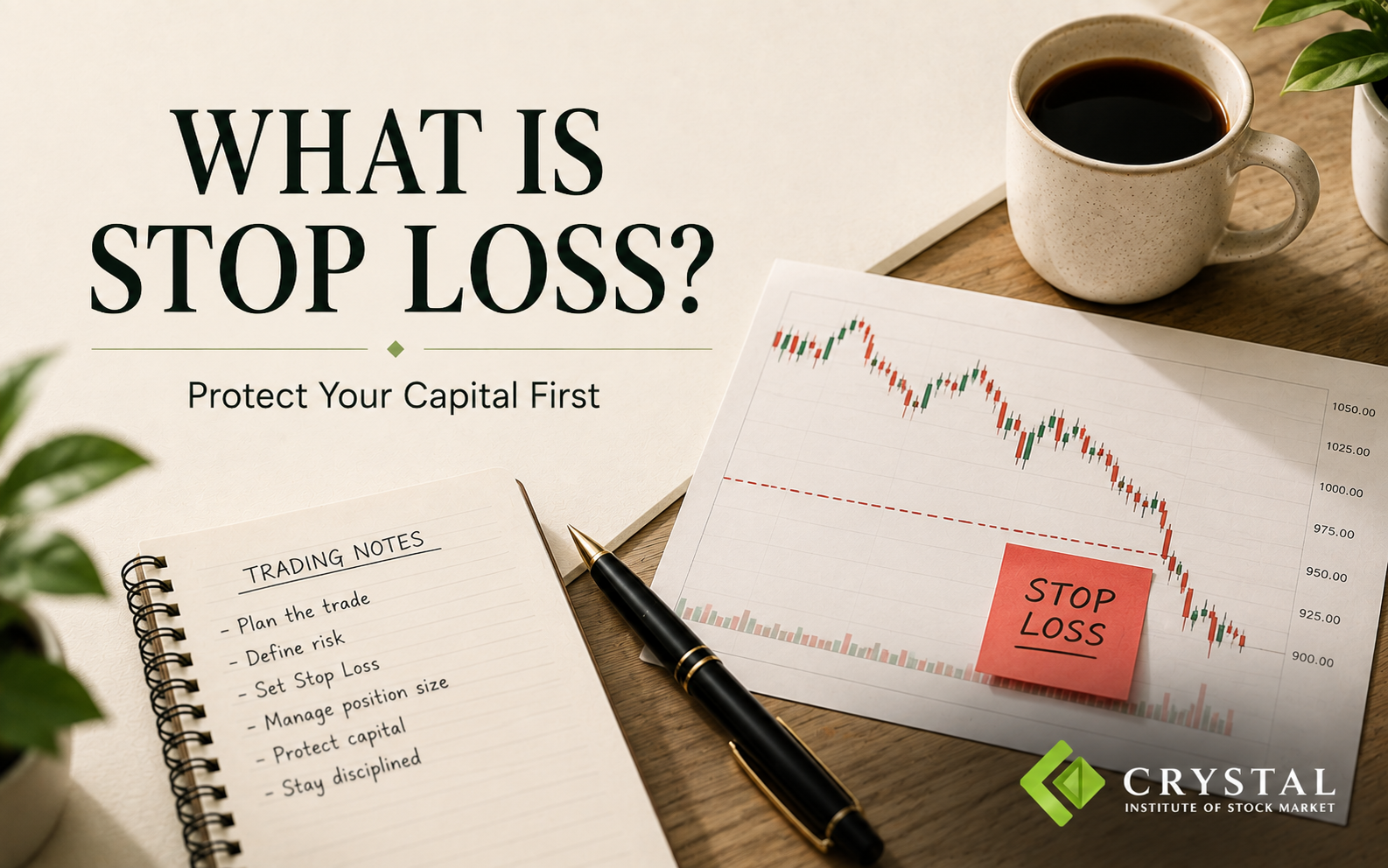
What is Stop Loss in the Stock Market? Meaning, Types & How Beginners Should Use It
If you've recently started learning the stock market, you've probably heard experienced traders say, "Always trade with a stop loss." But what exactly does that mean?
A stop loss is simply a predefined price at which you decide to exit a trade if it moves against you. Instead of hoping the market will recover, a stop loss helps you limit your loss and protect your capital.
The truth is, even the best traders are wrong many times. What separates successful traders from unsuccessful ones isn't a high win rate—it's good risk management.
Why is Stop Loss Important?
Imagine buying a stock at ₹1,000.
You expect it to move higher, but instead it starts falling.
Without a stop loss, many beginners keep waiting and hoping the price will bounce back. Sometimes it does—but many times it doesn't.
A stop loss removes emotions from trading and helps you follow a disciplined approach.
Using a stop loss can help you:
- Protect your trading capital
- Avoid large unexpected losses
- Reduce emotional decision-making
- Stay disciplined during market volatility
- Trade consistently over the long term
Remember, protecting your capital is more important than making quick profits.
Types of Stop Loss
There isn't just one way to place a stop loss. Traders use different methods depending on their strategy.
1. Fixed Stop Loss
This is the simplest method.
You decide in advance how much you're willing to lose before entering the trade.
Example:
Buy Price: ₹500
Stop Loss: ₹490
If the price falls to ₹490, you exit the trade.
2. Percentage Stop Loss
Some traders risk a fixed percentage of their entry price.
For example, a trader may decide never to risk more than 2% on a single trade.
This approach helps maintain consistency across different stocks.
3. Technical Stop Loss
Many professional traders place stop losses based on chart structure instead of random numbers.
Common areas include:
- Previous swing lows
- Important support levels
- Trendline breaks
- Moving averages
This method is widely used in technical analysis because it aligns with actual market behavior.
Common Stop Loss Mistakes
Many beginners understand the concept but still make costly mistakes.
Some of the most common ones are:
- Moving the stop loss further away after entering a trade
- Trading without any stop loss
- Placing stop losses too close to the entry price
- Risking too much on a single trade
- Ignoring market volatility
Discipline is often more important than finding the perfect entry.
Can a Stop Loss Guarantee No Loss?
No.
A stop loss helps reduce risk, but it cannot eliminate it completely.
During highly volatile markets or major news events, prices can gap up or gap down. In such situations, your order may execute at the next available market price rather than your exact stop loss level.
This is normal and one of the realities of financial markets.
Final Thoughts
Every successful trader has one habit in common—they focus on protecting their capital first.
A good trading strategy can only work over time if you survive losing trades. That's why understanding what is stop loss in the stock market is one of the first lessons every beginner should learn.
Whether you're investing or trading, using a well-planned stop loss can help you make more disciplined decisions and reduce emotional mistakes.
At Crystal Institute of Stock Market, we believe that successful trading isn't about predicting every market move—it's about managing risk wisely.
Disclaimer
This article is published for educational purposes only and should not be considered investment or trading advice. Stock market investments are subject to market risks. Please consult a SEBI-registered investment advisor or conduct your own research before making any investment decisions.
What is Stop Loss in the Stock Market? Meaning, Types & Beginner Guide
what-is-stop-loss-in-stock-market